
Description
Product Overview
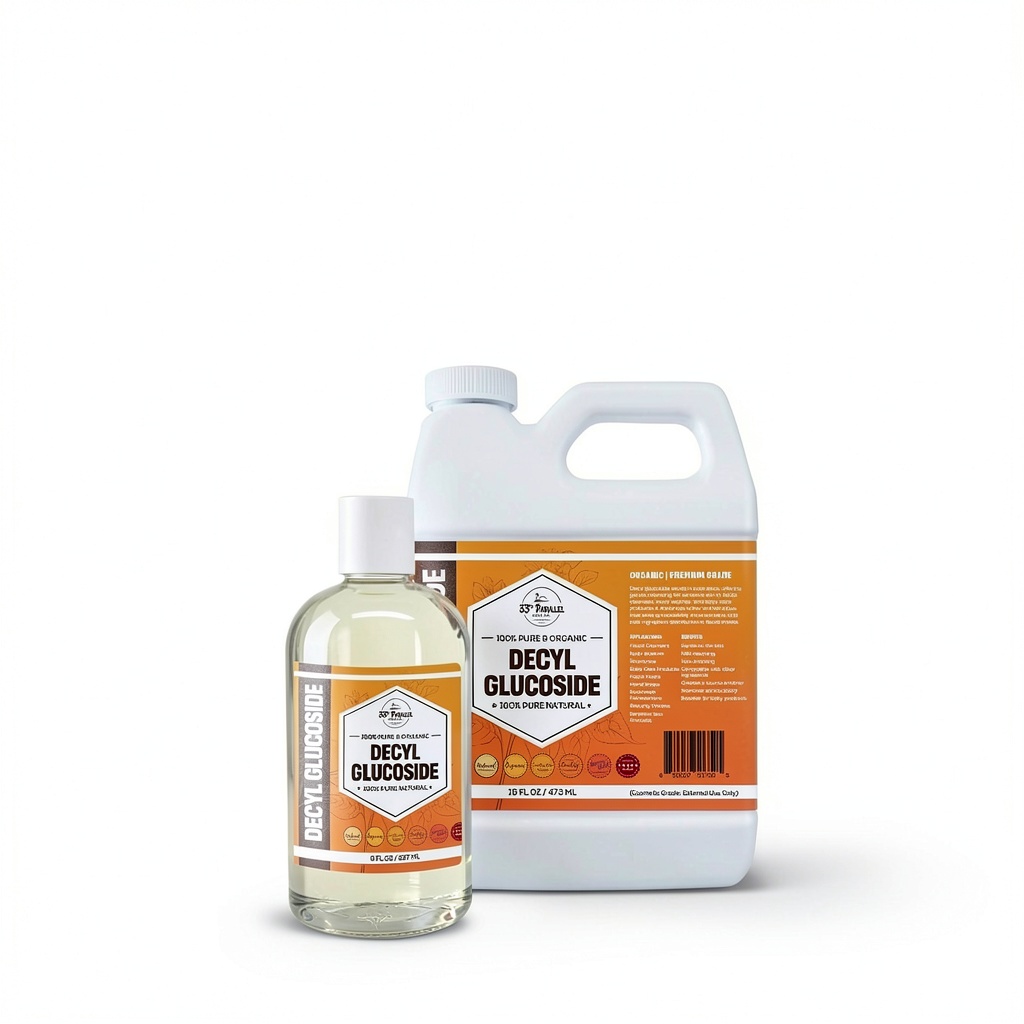
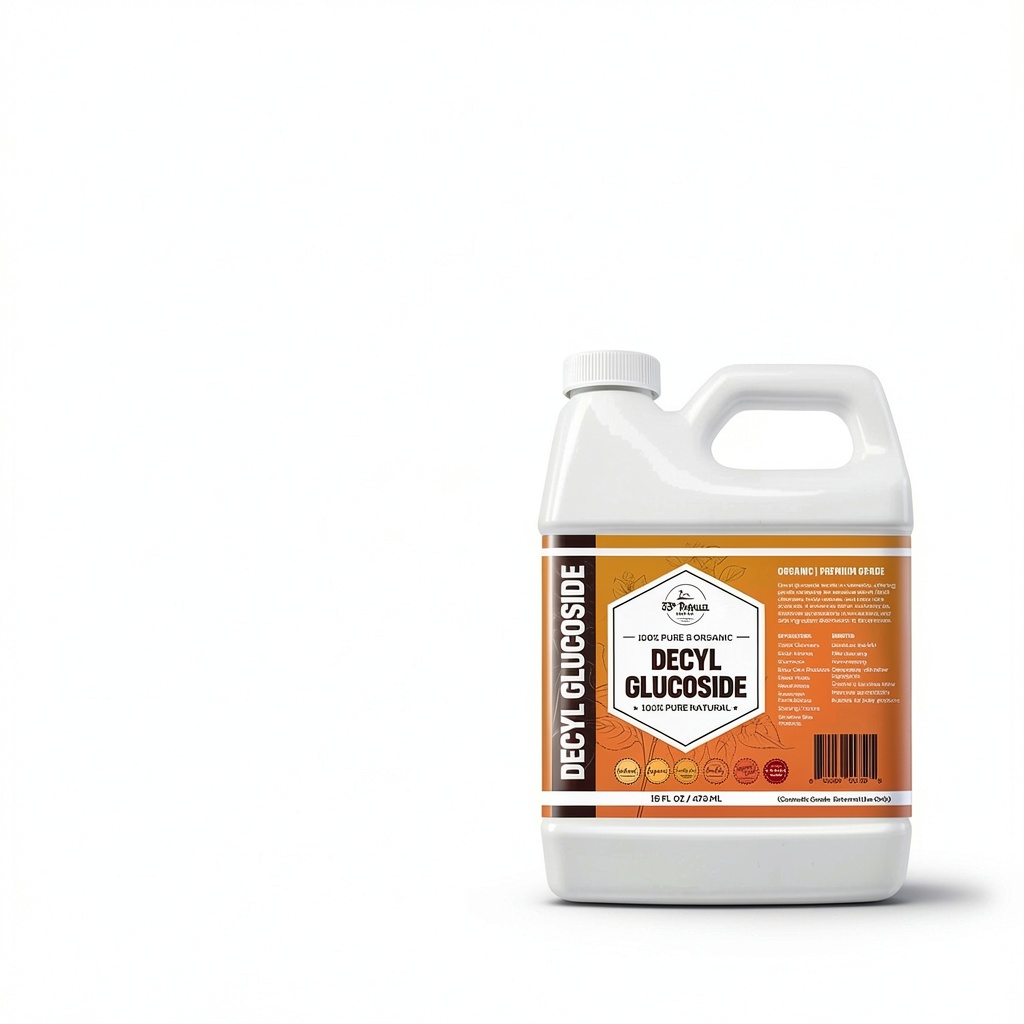
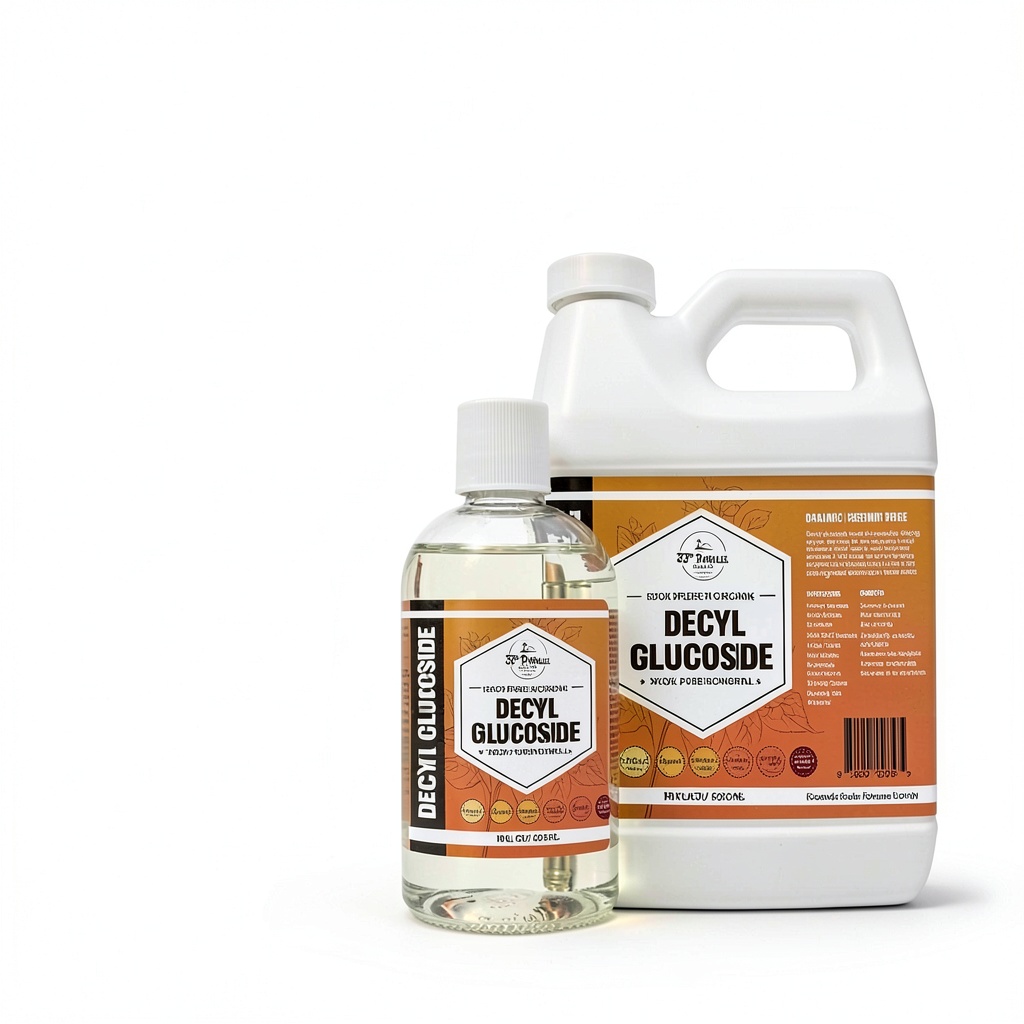
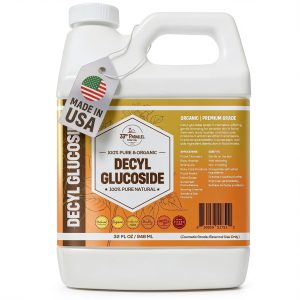
Decyl Glucoside liquid surfactant, supplied by 33rd Parallel Soap Co, is a premium‑grade, plant‑derived cleansing agent designed for formulators who demand both performance and sustainability. Derived from renewable coconut and corn sugars, the surfactant retains a non‑ionic structure that delivers a mild, low‑irritation foam while effectively removing oils, makeup residues, and environmental pollutants. Its biodegradable nature means it breaks down naturally in wastewater, supporting eco‑friendly product claims and reducing ecological impact. The 8‑ounce (237 ml) bulk bottle is packaged in a recyclable HDPE container, providing a convenient volume for small‑batch production or experimental DIY skin‑care projects. With a clear, slightly viscous liquid texture, the surfactant mixes easily with water and a wide range of cosmetic actives, from botanical extracts to silicone‑based conditioners, without destabilizing emulsions. Technical specifications list a pH range of 5‑7, a mild cleansing power comparable to traditional sodium laureth sulfates, and a gentle skin feel that makes it suitable for sensitive and baby‑care formulations.
Beyond its gentle cleansing ability, Decyl Glucoside delivers excellent solubility and stability across a broad temperature range, remaining clear and fluid from 4 °C up to 45 °C, which simplifies manufacturing processes that involve heating or cooling steps. The surfactant’s low critical micelle concentration (CMC) means that effective foam can be achieved at relatively low usage levels, reducing overall formulation cost while maintaining performance. It is also compatible with a wide spectrum of active ingredients, including vitamins, botanical extracts, polymers, and preservatives, without causing precipitation or phase separation. For formulators concerned about shelf life, Decyl Glucoside exhibits a neutral odor and does not promote microbial growth when combined with standard preservative systems, making it a reliable base for both water‑based and oil‑in‑water emulsions. Proper storage in a cool, dry place away from direct sunlight preserves its potency for up to two years from the date of manufacture.
The ingredient complies with major international cosmetic regulations, including the EU Cosmetic Regulation (EC) No 1223/2009, the US FDA’s Voluntary Cosmetic Registration Program (VCRP), and the ASEAN Cosmetic Directive. Its purity exceeds 98 % as verified by HPLC analysis, and heavy‑metal content is below 10 ppm, meeting the stringent limits set for personal‑care products. Because Decyl Glucoside is derived from renewable plant sources, it qualifies for natural‑origin labeling under the COSMOS‑EU standard, allowing brands to market their formulations as natural or organic when combined with other certified ingredients. The product is also free from known allergens such as sulfates, parabens, and phthalates, supporting hypoallergenic claims and facilitating acceptance in sensitive‑skin markets worldwide.
Safety testing performed on Decyl Glucoside follows OECD TG 405 and 406 guidelines, confirming its non‑sensitizing and non‑irritant profile on human skin. In repeated‑dose dermal studies, no adverse effects were observed at concentrations up to 20 %, supporting its suitability for high‑foaming applications. The surfactant also exhibits low acute toxicity, with an oral LD50 value exceeding 5 g kg⁻¹ in rodent models, classifying it as a Category 5 substance under GHS criteria. These data provide formulators with confidence when claiming “hypoallergenic” or “dermatologically tested” on product packaging, facilitating market entry in regions with stringent safety regulations.
![[Product front view showing all components]](https://www.formafinds.store/wp-content/uploads/2026/07/e38a2ef5abc54d9b925fbfe915aca448.jpg)
Usage
Formulators can incorporate Decyl Glucoside into facial cleansers, body washes, shower gels, foaming soaps, shampoos, and baby‑care products at concentrations ranging from 2 % to 15 % depending on the desired foam level and skin‑feel. In a typical facial cleanser, a 5 % inclusion yields a silky lather that rinses clean without leaving a tight or dry sensation, making it ideal for daily use on all skin types, including eczema‑prone or rosacea‑sensitive skin. For body washes, a 7‑10 % dosage creates a rich, cushiony foam that helps distribute moisturizing ingredients evenly across the skin surface, enhancing overall hydration. Shampoo formulations benefit from the surfactant’s ability to gently lift sebum while preserving the natural scalp barrier, and the low irritation profile allows it to be used in baby shampoos at 3 %‑5 % without compromising safety. Additionally, Decyl Glucoside serves as an effective oil‑to‑water emulsifier in mask and cleanser hybrids, enabling the stable incorporation of lightweight oils such as argan or jojoba for added nourishment. The surfactant’s compatibility with a broad pH range also permits its use in acid‑balanced products like glycolic acid peels, where it maintains foaming performance without neutralizing actives.
In hand soap formulations, Decyl Glucoside at 3 %‑7 % creates a gentle, non‑drying lather that effectively removes germs while preserving the skin’s natural moisture barrier. Its mildness makes it suitable for frequent hand‑washing in healthcare or food‑service environments without causing irritation or dermatitis. For facial masks that transition from oil to water, the surfactant acts as an emulsifier, allowing oil‑based actives such as rosehip seed oil or squalane to be dispersed evenly in a water‑based gel matrix, resulting in a smooth, spreadable texture that dries to a non‑sticky finish. The low foaming nature of Decyl Glucoside in mask applications also reduces the risk of over‑foaming, which can compromise the mask’s adherence to the skin and affect the delivery of active ingredients.
When used in shower gels and foaming soaps, Decyl Glucoside provides a light, airy foam that rinses away quickly, leaving the skin feeling refreshed and hydrated. Its non‑ionic character reduces the need for additional conditioning agents, simplifying the ingredient list and lowering the overall cost of the formulation. Because the surfactant is derived from renewable resources, manufacturers can highlight its reduced carbon footprint in marketing materials, appealing to environmentally conscious consumers. Moreover, the rapid biodegradability ensures that the surfactant does not accumulate in wastewater treatment systems, supporting compliance with stringent environmental regulations in regions such as the European Union and Canada. The pleasant mild scent of the base ingredient also allows formulators to add fragrance oils without the risk of overpowering the product’s aroma profile.
Beyond personal‑care, Decyl Glucoside is increasingly adopted in mild industrial cleaning solutions where a low‑foaming, biodegradable surfactant is required. Its compatibility with enzymes such as proteases and amylases makes it an excellent carrier for enzymatic cleaners used on delicate surfaces like electronics, medical equipment, and food‑processing machinery. At concentrations of 2 %‑4 %, the surfactant provides sufficient wetting action to lift soils while remaining gentle enough to avoid corrosion or material degradation. The neutral pH range also allows it to be blended with acid or alkaline cleaners without causing precipitation, offering formulators flexibility to design multi‑stage cleaning systems that meet stringent occupational health standards.
Why Choose Us
33rd Parallel Soap Co adheres to strict quality control protocols, testing each batch of Decyl Glucoside for purity, microbial load, and surfactant activity to guarantee consistent performance across shipments. The raw material is sourced from certified sustainable farms, and the manufacturing process follows ISO‑9001 standards, ensuring traceability from seed to final product. Customers receive a Certificate of Analysis (CoA) with every order, providing detailed information on HPLC purity, heavy‑metal limits, and biodegradability metrics, which simplifies regulatory compliance for cosmetics and personal‑care manufacturers. Our technical support team includes experienced formulators who can advise on optimal usage levels, compatibility with other ingredients, and troubleshooting for stability issues, offering a value‑added service that extends beyond simple product supply. Moreover, the company offers a satisfaction guarantee: if the surfactant does not meet the described specifications, a replacement or refund will be issued promptly, reinforcing confidence in the purchase decision.
Our commitment to sustainability extends beyond the raw material itself. 33rd Parallel Soap Co sources its plant feedstock from farms that practice regenerative agriculture, promoting soil health and biodiversity. The manufacturing facility operates under a zero‑waste policy, recycling water and capturing emissions to minimize environmental impact. In addition, the company holds certifications such as ISO 14001 for environmental management and B Corp status, reflecting a holistic approach to social and ecological responsibility. Clients benefit from transparent supply chain documentation, enabling them to trace the ingredient back to its origin and verify compliance with corporate social responsibility (CSR) goals.
Key Features
- Plant‑derived and biodegradable, supporting eco‑friendly product claims
- Non‑ionic and low‑irritation, safe for sensitive skin and baby formulations
- Creates a rich, stable foam that rinses clean without residue
- Highly compatible with oils, silicones, and a wide pH range for versatile formulation
- Backed by technical support and a satisfaction guarantee for peace of mind
FAQ
What concentration of Decyl Glucoside should I use in a facial cleanser?
A typical facial cleanser uses Decyl Glucoside at 4 %‑6 % of the total formula weight. At this level the surfactant produces a gentle, creamy lather that lifts makeup, sunscreen residue, and excess sebum while preserving the skin’s natural lipid barrier. Formulators often start at 4 % and evaluate foam density, skin feel, and rinse‑off performance; if a richer foam is desired, the level can be increased up to 8 % without causing irritation on normal skin. For very sensitive or compromised skin, staying at the lower end of the range (around 3 %‑4 %) is advisable, and the surfactant can be combined with soothing agents such as aloe vera or oat extract to further reduce any potential sting. Always perform a stability test when adjusting the concentration, as higher levels may affect the viscosity of the final product.
Is Decyl Glucoside safe for use in baby shampoo?
Yes, Decyl Glucoside is considered safe for infant‑care applications because it is a non‑ionic surfactant with a low irritation rating and a gentle cleansing action. In baby shampoo formulations the typical usage level ranges from 3 % to 5 %, which provides enough foam to rinse hair effectively while maintaining a soft, tear‑free feel. The plant‑derived origin and rapid biodegradability also satisfy parental concerns about harsh chemicals and environmental impact. When combined with mild conditioning agents such as panthenol or chamomile extract, the shampoo can soothe the scalp and leave the hair manageable without stripping natural oils. As always, manufacturers should conduct a pediatric safety assessment and ensure the final product complies with relevant cosmetic regulations before market release.
Can Decyl Glucoside be combined with other surfactants?
Absolutely. Decyl Glucoside blends well with anionic, amphoteric, and other non‑ionic surfactants, allowing formulators to fine‑tune foam density, viscosity, and cleansing strength. A common hybrid system pairs 5 % Decyl Glucoside with 3 % sodium cocoyl isethionate and 2 % cocamidopropyl betaine to achieve a balanced mildness, high foam volume, and good skin feel. Because Decyl Glucoside is non‑ionic, it does not interfere with the charge balance of anionic surfactants, which helps maintain product stability and prevents precipitation. When mixed with amphoteric agents such as cocamidopropyl hydroxysultaine, the combination can further reduce irritation potential while delivering a silky, cushiony lather. As with any multi‑surfactant system, it is advisable to perform compatibility testing and evaluate the final pH to ensure optimal performance across the intended usage range.
How does the biodegradability of Decyl Glucoside compare to traditional sulfates?
Decyl Glucoside is classified as readily biodegradable under OECD 301B and 301C test guidelines, typically achieving 90 % degradation within 21 days. In contrast, many conventional sulfate surfactants such as sodium laureth sulfate or sodium dodecyl sulfate exhibit slower breakdown rates and can persist in aquatic environments for several weeks to months, raising concerns about aquatic toxicity. The rapid biodegradation of Decyl Glucoside results from its sugar‑based backbone, which microorganisms can metabolize efficiently. This property not only supports eco‑label certifications like ECOCERT and USDA‑USDA Organic but also aligns with consumer demand for greener personal‑care products. Formulators seeking to reduce the environmental footprint of their formulations can therefore replace sulfates with Decyl Glucoside without sacrificing cleansing performance, while delivering a more sustainable end‑of‑life profile.
What storage conditions are recommended for Decyl Glucoside?
Decyl Glucoside should be stored in a cool, dry environment away from direct sunlight and sources of heat. The recommended storage temperature is between 15 °C and 25 °C (59 °F‑77 °F), which helps preserve its viscosity and prevents premature degradation. Keep the container tightly sealed to avoid moisture ingress, which could dilute the product and affect its surfactant activity. For bulk shipments, it is advisable to use insulated pallets or climate‑controlled warehouses to maintain a stable temperature during transit. The material is stable for up to 24 months when stored under these conditions, but manufacturers should always check the batch’s Certificate of Analysis for the exact shelf‑life date. If the liquid appears cloudy or develops an off‑odor, it may indicate contamination or exposure to extreme temperatures, and the batch should be discarded.
Reviews
There are no reviews yet.